What Building a Hardware Startup Taught Me About Time
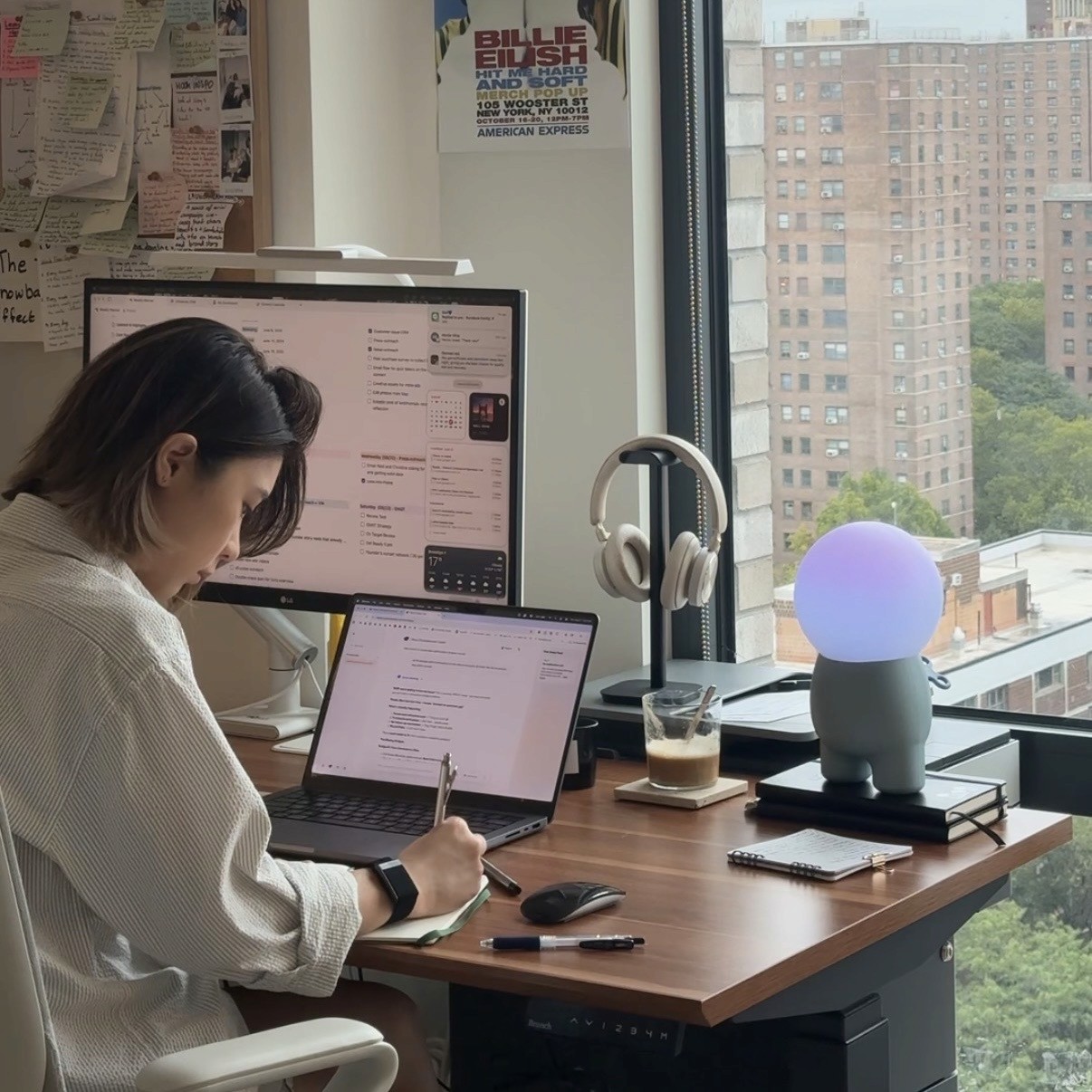
When I graduated from Parsons in the summer of 2023, I did not expect that just two years later, I would be calling myself an entrepreneur, let alone building a hardware startup as a solo founder. If I am being completely honest, when I decided to pursue Buddy, I dived in headfirst without fully knowing what I was doing. I had conviction, ambition, and a vision, but more accurately, I was a little delusional and very stubborn.
A few months after officially launching Buddy in July 2025, I was having Thai food with one of my mentors. He lives in Los Angeles, and I am based in New York City, so most of our conversations have always been online. That night stood out to me, not just because it was one of the few times we spoke in person, but because for the first time, he admitted that he did not think I would actually get this far. It was one of those moments that made me want to cry. :')
A design school kid with a bold idea, believing she could build a product, let alone three, and ship them all within four months.
I do not share this to prove him wrong (he was right). I share it because it captures how unrealistic my own expectations were when I started. Looking back, I think it was my stubbornness more than anything else that kept me going.
Sentimentality aside, if there is one core lesson I have learned so far, it is this. There is never enough time to do everything. The most important skill you can build is learning what not to work on.
Choosing where to put your time and energy, and making sure those things actually move the needle, is much harder than it sounds.
As cliché as it is, I have been on the brink of burnout more times than I can count.
What made this transition especially jarring was how different it felt from design school. As a student, I never pulled all-nighters. I always had my weekends free. I was efficient, disciplined, and finished my capstone project, which was Buddy at the time, two weeks before the deadline. Life as a solo founder felt like a complete 180.
Suddenly, there was never enough time. Everything took longer than expected. Things broke, changed, or went wrong far more often than I was prepared for. It was emotionally exhausting.
I spent weeks trying to perfect a business plan, days redoing product packaging, and far too many hours planning content calendars that I did not even end up following. I treated everything as equally important because, as designers, we are trained to believe that even the smallest details matter.
I remember asking a founder friend how he managed his time and how he still protected his Saturdays, even when it was just him and his co-founder. He simply told me to focus on what was important. I understood the idea, but I could not really implement it myself. To me, everything was important. Everything needed to look good. Everything felt urgent.
The turning point came when I realized that, as a brand new company with only one person behind it, the most important thing I could do was to get myself out there. Growth at that stage did not come from perfect planning. It came from visibility. I realized that I did not need to plan the perfect content calendar or map out every post in advance. What actually mattered was posting consistently and getting my work in front of as many eyes as possible.
Spending hours planning content gave me a sense of control, but it did not move the business forward. Posting imperfectly did. That realization forced me to separate what felt productive from what actually drove progress.
What I eventually realized, and continue to relearn, is that we will always expand work to fill the time we give it. The more time we allocate to something, the more time it will consume. So if there is one muscle worth building early, regardless of what you do, it is the ability to prioritize the work that gives the highest return on your energy.
Meet Buddy